
Open 24/7! Servicing all of Sydney’s Eastern Suburbs
Our Average Response time is: 1hr 53min 47sec
From a 1900s federation terrace in Newtown to a renovated semi in Haberfield or an apartment in Burwood, the Inner West is the most varied plumbing job market in Sydney. Pipes, fittings and drains in this part of town are often 80–120 years old - and they don't respond well to a plumber who's only ever worked on new builds. Plumberoo is a fully licensed Sydney plumbing team (NSW Fair Trading licence 289252c) servicing the Inner West with a published guarantee: if we don't arrive within 2 hours, the call-out fee is free. Our live average response across our Sydney service area is under 2 hours. Call (02) 9191 8787 and speak to a real person - no call centre, no scripts, no surprise invoices.
Plumberoo handles every household and small commercial plumbing job across the Inner West. Each service below links to the dedicated page on our site - but if you'd rather just talk to a plumber, call (02) 9191 8787.





Drive five minutes through Newtown, Marrickville, Leichhardt or Balmain and you'll see why plumbing this part of Sydney is its own discipline. The housing stock here is dominated by Federation terraces, Victorian workers' cottages and post-war additions, with original drainage and water supply systems that pre-date most of modern Australian plumbing standards. A lot of what's behind the walls and under the floors was installed before WWII.
That changes the job. The drain you're clearing might be vitrified clay laid in 1908. The hot water line could be galvanised iron from a 1950s renovation, corroded from the inside out. The water main coming in from the street is often the original lead-jointed cast iron that Sydney Water has been slowly replacing for decades. And the house itself probably has a heritage overlay attached to it through Inner West Council, the City of Sydney, Burwood, Strathfield or Canada Bay - which means a plumber who doesn't understand what triggers council approval can land you with a compliance problem on top of a plumbing one.
Plumberoo works across the full age range of Inner West homes - federation terraces, art deco apartment blocks, mid-century semis, 90s townhouses and brand-new builds - and adjusts the materials, methods and council workflow accordingly. We're not learning on your house.
This is the part of Inner West plumbing nobody else takes seriously enough. Federation terraces, Victorian workers' cottages, art deco semis and Edwardian bungalows weren't built with current plumbing in mind - they were retrofitted, decade by decade, with whatever material was standard at the time. Open up a wall in a 120-year-old Inner West terrace and you can find lead, copper, galvanised iron, brass and PVC all spliced together on the same run.
That doesn't mean it all needs ripping out. A lot of original plumbing in good Inner West homes is still serviceable if it's diagnosed properly. The trick is knowing which sections are at end-of-life, which can be reused, and which can be relined or sleeved rather than replaced. Get that diagnosis wrong and you either spend twice as much as you need to, or you do nothing and have a flood three winters later.
Vitrified clay was Sydney's default drainage material until the 1960s. It's brittle, it cracks at the joints, and root intrusion from established street trees (especially fig trees, which the Inner West has plenty of) finds those joints fast. We CCTV before we recommend anything - sometimes one targeted reline fixes a chronic drain problem for the next 50 years.
Lead supply pipes were phased out of new Australian plumbing decades ago, but older Inner West homes can still have lead-jointed water service connections at the street, lead-soldered joints internally, or original lead waste lines in bathrooms. We test, we tell you what's there, and we replace anything that's a health or compliance risk.
Galv supply lines were the standard in 1950s and 60s renovations across the Inner West. They corrode internally - by the time you see a leak, the inside of the pipe has been narrowing for years. The classic symptom is hot water pressure that's dropped slowly over time. Replacement with copper or PEX is straightforward; the trick is doing it without tearing apart period features.
Sandstone footings, sandstone retaining walls and original brick foundations all complicate excavation. We plan access carefully and prefer trenchless methods wherever the job allows it.
Inner West Council, City of Sydney, Burwood, Strathfield and Canada Bay all administer heritage overlays street-by-street. Some plumbing work doesn't trigger approval at all; some does. We'll tell you which side of the line your job sits on before we start - and we work to keep jobs out of the approvals process where it's legally allowed (full detail in the council approvals section below).
If we could pick one service to recommend to Inner West homeowners with original drainage, it would be pipe relining - and we say that having no commercial interest in pushing relining over replacement. The maths just works.
Pipe relining is trenchless drain repair. We access the drain through an existing inspection point or a small keyhole excavation, insert a resin-saturated liner into the damaged pipe, inflate it, and cure it in place. The result is a new pipe inside the old one - same diameter (give or take 3%), same flow, but joint-free and root-proof for a 50-year design life.
Pipe relining is generally around 30% less than the cost of full dig-and-replace once you factor in restoration of paving, landscaping and any heritage finishes. On a heritage Inner West block, the savings can be larger - sometimes the relining job costs less than the restoration of what excavation would have destroyed.
Not every drain is a candidate. We CCTV first, then quote. If the pipe is too collapsed, too misaligned, or the diameter change matters for the job, we'll tell you replacement is the better option. Honest diagnosis first, sales pitch never.

This is the single most asked question by Inner West homeowners and the one most plumbers refuse to talk about. We'll give you the practical version - but please treat this as general guidance, not legal advice. Your specific property's heritage classification (or whether it sits within a Heritage Conservation Area) is what controls the answer.
Inner West Council administers multiple Heritage Conservation Areas, plus individually listed heritage items. Internal plumbing maintenance and like-for-like fixture replacement generally don't need consent. Anything that affects the front or street-facing facade of a heritage-listed property - new external pipework, new hot water unit relocations to the front, replacement guttering on a listed item - usually does. We help you confirm in advance.
Heritage controls are broadly similar. The City of Sydney has additional rules on contributory items inside Heritage Conservation Areas - meaning a non-listed home can still be controlled by the streetscape. Worth confirming before any externally visible plumbing change.
Each council has its own Local Environmental Plan and Heritage Conservation Areas. Burwood and Strathfield have large pockets of Federation-era homes under heritage protection; Canada Bay covers Drummoyne, Five Dock and Concord with mixed eras. The pattern is consistent: internal work generally fine, externally visible work generally needs checking.
If your job touches anything in the second list, we'll flag it up front. Where approval is needed, we work with private certifiers and lodge the right paperwork so it doesn't stall the job.
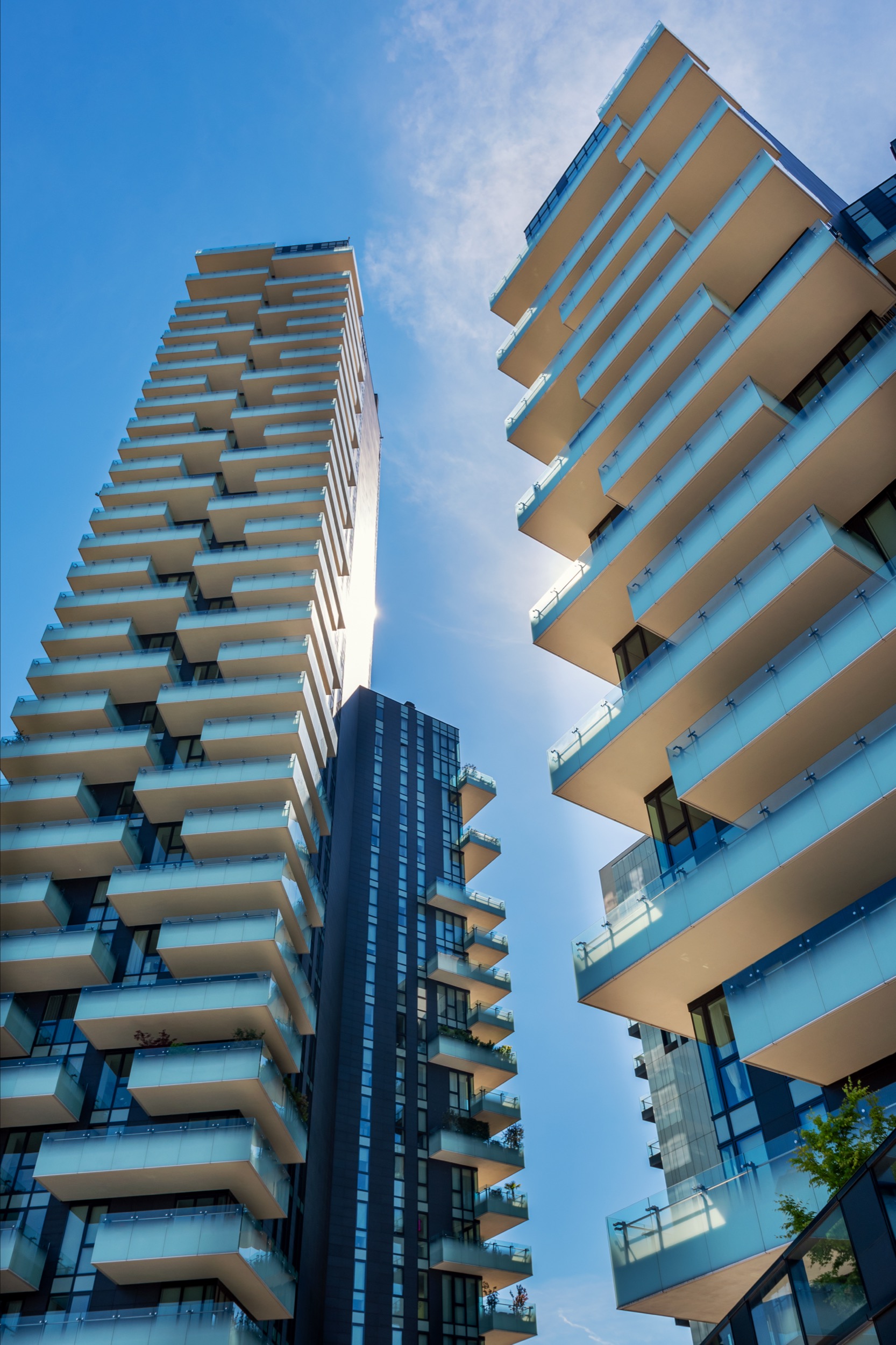
Apartment and strata plumbing in the Inner West runs into problems single-dwelling plumbers never see. Shared stacks, common-property hot water, backflow prevention devices at the building boundary, and body corporate workflows where the homeowner can't authorise the work directly - it's a different operating model, and you want a plumber who's been through it before.
We work with strata managers across Sydney and understand the approval chain: identify the issue, scope and quote, lodge for body corporate or strata committee approval where required, attend and complete the work, provide itemised invoicing that aligns with strata reporting. Where the job is genuinely urgent (active leak, gas smell, no water to the building), we attend immediately and document the emergency afterwards so the strata manager can process it as authorised emergency works.
Most Inner West apartment blocks have shared waste stacks running through multiple units. A blockage on level 3 can back up into level 2's bathroom. Identifying which lot owner caused the blockage, where the blockage actually sits, and whether it's lot-property or common-property are all questions we can answer using CCTV - and the answer changes who pays. We document everything for strata.
Sydney Water requires backflow prevention devices on commercial and multi-residential properties, with annual testing by a licensed backflow plumber. We install, test, repair and certify. If your strata manager is asking for a backflow test report and the building's last one is overdue, we can attend and certify within standard turnaround.
Centralised hot water systems, in-unit instantaneous units and gas hot water on individual balconies all show up in Inner West apartment buildings. Each has its own failure modes and its own approval path - we identify which type you're dealing with and work it through correctly.
Our 24/7 emergency line is (02) 9191 8787. A real person picks up - no call centre, no after-hours diversion to a different city. We dispatch directly to the on-call plumber and you get a confirmed ETA on the phone, not a vague "we'll get to you eventually."
Our published guarantee: if we don't arrive within 2 hours of your booking, the call-out fee is free. Our live average response across our Sydney service area is 1 hour 53 minutes - and we publish that number openly because we hit it. Inner West sits inside our wider service area; depending on where our team is working on any given day, same-day attendance covers most of the Inner West.
If you're not sure which category you're in, just call. We won't talk you into an after-hours visit you don't need.
Two things you should never have to wonder about with a plumber: what it's going to cost to have them turn up, and whether the price they quote is the price you'll actually pay. We're upfront on both.
We don't charge a call-out fee on bookings made Monday to Friday, 7am to 3pm. That's the asterisk - and it covers the window most of our customers book inside. The plumber arrives, looks at the job, gives you a fixed price, and you decide whether to proceed.
Outside that window - after-hours, weekends, public holidays - an after-hours call-out fee applies. We quote it on the phone before we leave the depot. No surprises when we arrive.
Once we've assessed the job in person, you get a fixed price for the work. Never pay more than we quote - guaranteed. If we hit something unexpected mid-job (a collapsed section of clay drain, a corroded galvanised joint we couldn't see from the surface, an extra valve we need to free up), we stop, show you, and re-quote before we keep going. No surprise invoices. No "while we were down there" charges added to the bill.
Sydney Water's sewer mains underneath the Inner West are among the oldest in the network. Many of the streets in Newtown, Camperdown, Marrickville, Erskineville, Leichhardt, Balmain and Rozelle were connected to the original Sydney sewer system between 1900 and 1930. That infrastructure has been patched, lined and partially replaced over the decades, but in plenty of streets the original mains are still in service.
This affects you as a homeowner in three ways: subsidence, root intrusion, and pressure on your own house service line.
Old sewer mains develop cracks. Cracks leak water and groundwater fines into the pipe; over decades, that washes soil out from above and around the main. The result is slow ground movement - and in the Inner West that ground movement shows up as cracked house slabs, settled rear additions and warped tiled floors. We can't fix the Sydney Water main, but we can spot when a property's drainage problem is being driven by subsidence and tell you whether the issue's on your side of the boundary or the network's.
Inner West streets are lined with established figs, plane trees and gums. Their roots are aggressive. They find any joint or hairline crack in an old clay pipe - yours and Sydney Water's - and grow inside, eventually choking flow. A drain that blocks every winter and clears every summer is almost always root intrusion. We CCTV to confirm; we jet to clear; we reline to fix permanently.
Where the Sydney Water main is old or partially blocked, your house service line takes the pressure. That can mean slow drainage on the worst days, periodic backups during heavy rain, and faster wear on your own pipes. The fix is at the boundary or just upstream of it - we know what's our responsibility and what's Sydney Water's, and we'll tell you which is which.
Plumbing prices in the Inner West vary with the age of the home, access difficulty (tight blocks, terraces with no side access, sandstone footings), and heritage considerations. The ranges below are indicative of the Inner West market generally. Plumberoo's own prices sit toward the lower end of these ranges and are always provided as a fixed quote in writing before work starts.
| Job | Typical Inner West range (inc GST) | Notes |
| Standard call-out (business hours) | $0 to $99 | Plumberoo: $0 Mon–Fri 7am–3pm; after-hours fees quoted before dispatch |
| Hourly rate | $110 to $180 + GST | Plumberoo: from $120 + GST |
| Blocked drain - basic clear | $99 to $450 | Plumberoo: from $99 + GST |
| Blocked drain - CCTV diagnosis | $300 to $700 | Often included free with relining quote |
| Drain jetting - heritage main run | $450 to $1,200 | Depends on length and root load |
| Pipe relining (per metre) | $450 to $750 | ~30% cheaper than full dig-and-replace |
| Tap repair / replacement | $199 to $450 | Plumberoo: from $199 + GST |
| Toilet repair | $299 to $650 | Plumberoo: from $299 + GST |
| Burst pipe - accessible | $350 to $900 | Higher in heritage walls or sandstone |
| Burst pipe - concealed in slab/wall | $900 to $3,000+ | Leak detection adds $250–$500 |
| Hot water repair | $200 to $900 | Plumberoo: hot water work from $799 + GST |
| Hot water system replacement (gas) | $1,800 to $3,500 | Depending on unit + connection |
| Hot water system replacement (heat pump) | $3,500 to $6,500 | Rebates may apply |
| Gas leak repair | $200 to $850 | Plumberoo: from $70 + GST call-out |
| Galvanised pipe replacement (typical run) | $1,800 to $5,500 | Heritage access can lift this |
| Clay drain replacement (dig + replace) | $3,500 to $12,000+ | Often replaced by relining at lower cost |
| Bathroom rough-in (renovation) | $2,500 to $6,500 | Excluding fit-off and waterproofing |
| After-hours emergency attendance | $200 to $450 + GST | Quoted on the phone before dispatch |
Ranges reflect typical Inner West market pricing. Actual quotes depend on access, scope and condition. Plumberoo provides a fixed price in writing before work starts.
Call Plumberoo on (02) 9191 8787 for fixed-price, fully licensed plumbing across the Inner West. $0 call-out Mon–Fri 7am–3pm. Under 2-hour response or the call-out fee is free.