
Open 24/7! Servicing all of Sydney’s Eastern Suburbs
Our Average Response time is: 1hr 53min 47sec
Blocked drains are one of those everyday problems most of us run into at some point. While a plunger can do the trick most times, some blockages sit deeper in the pipe or are a bit too stubborn to shift with simple suction alone.
In these cases, a drain snake (or toilet auger) can be a real lifesaver! These tools are designed to reach further into your plumbing and break up or pull out the tougher clogs that a plunger can’t always reach.
Used correctly, they can clear most household blockages quickly and effectively. But they do need a careful hand. Too much force or using the wrong tool in the wrong fixture, however, can end up causing damage instead of solving the problem.
In this quick guide, we’ll walk you through how to use a drain snake or toilet auger safely, when to use each one, and the common mistakes to avoid so you can tackle blockages with confidence
While they are often used interchangeably, a drain snake and a toilet auger are actually designed for different types of blockages and fixtures. Understanding the difference is important—not just for getting the job done properly, but for avoiding unnecessary damage to your plumbing.
A drain snake is a long, flexible metal cable with a coiled or corkscrew-style tip and a hand crank. You feed it into a sink, shower, tub, or floor drain, then rotate the handle to break up or hook the blockage so it can be pulled back out.
Because the cable is thin and flexible, it can follow the bends in household pipework with ease. This makes it ideal for clearing everyday blockages in drains where hair, soap build-up, or debris tends to collect.
A toilet auger is designed specifically for toilets. It’s shorter, stiffer, and includes a protective curved sleeve at the end.
That sleeve is the key difference as it rests against the porcelain bowl and guides the cable safely through the toilet’s S-bend without scratching or cracking the surface. This allows you to clear blockages inside the toilet trap without damaging the fixture.
🚽Unlike a standard drain snake, it’s built to work within the tight shape of a toilet’s internal plumbing.
For more stubborn or deeper blockages, plumbers may use powered or drum augers. These are much longer, often 8 metres or more, and motorised for extra force.
They’re typically used for sewer lines or heavy-duty blockages that sit beyond the reach of standard hand tools. While highly effective, they require experience to operate safely, as excessive force or incorrect handling can damage pipes or cause injury, particularly in older plumbing systems.
| Feature | Drain Snake | Toilet Auger |
| Primary Use | Sinks, showers, tubs, floor drains | Toilets only |
| Cable Design | Long, flexible metal cable | Shorter, stiffer cable |
| Head Type | Corkscrew or hook-style tip | Spiral head with protective sleeve |
| Flexibility | High – designed to navigate bends in pipes | Moderate – designed for toilet trap shape |
| Protective Features | None | Curved rubber/plastic sleeve to protect porcelain |
| Risk of Damage | Low in appropriate drains | High if used incorrectly or in the wrong fixture |
| Ease of Use | Moderate | Easy for most homeowners |
| Best For | Hair, soap scum, general household clogs | Toilet paper, waste, small obstructions |
| Typical Length | Varies (often 3–10m+) | Short (usually 0.6–1m) |
| Professional Version | Drum/powered augers for deep blockages | Rarely powered in household use |
| Key Advantage | Versatile for multiple drain types | Safe and specifically designed for porcelain toilets |
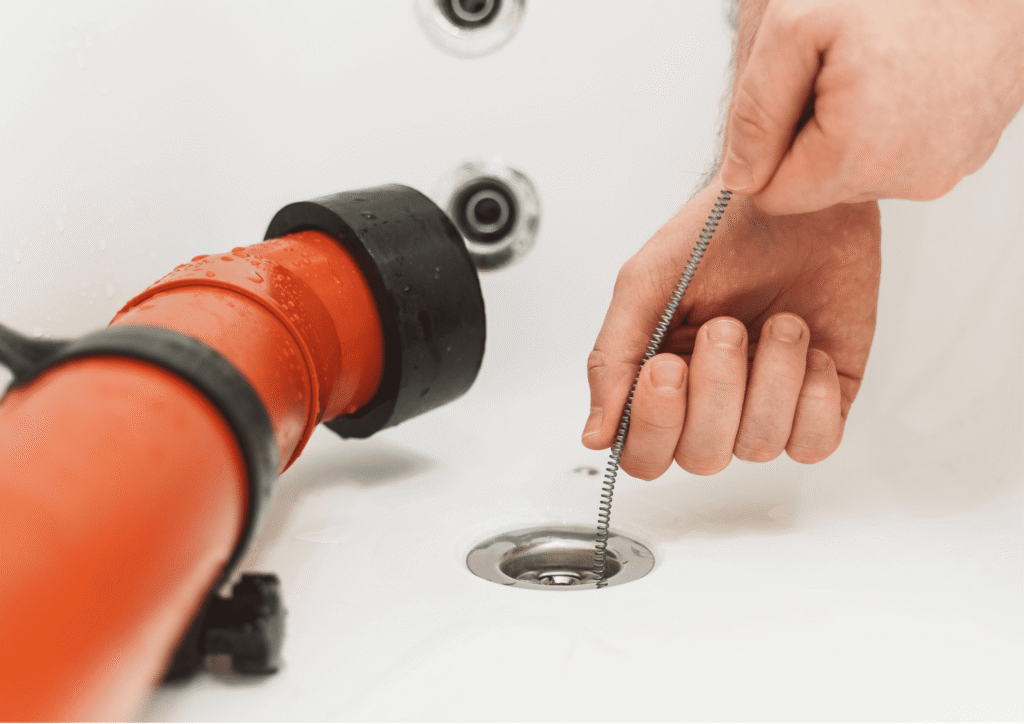
Snaking a sink or shower drain is a straightforward DIY task for most homeowners, as long as you take your time and let the tool do the work. The key is control; gentle pressure, slow movement, and patience will get you much further than force ever will.
Before you bring out the drain snake, a little preparation goes a long way!
Put on rubber gloves and, if possible, lay down an old towel to catch any mess. Position a bucket underneath the pipework if you can access it. Then remove any visible obstructions like a pop-up stopper, drain cover, or strainer so the cable has a clear entry point.
It’s also best to avoid pouring chemical drain cleaners down beforehand. If the clog doesn’t clear, you’ll be working in a pipe full of harsh, caustic liquid that can splash back during snaking. Over time, these chemicals can also weaken the cable, making it more likely to snap under pressure.
Recommended read: How to Unblock a Shower Drain
💡Pro Tip: Check the P-Trap First
In many bathroom and kitchen sinks, the blockage is actually sitting in the P-trap—the U-shaped pipe directly under the basin. Placing a bucket underneath and unscrewing the trap is often quicker, cleaner, and easier than snaking from above.If the clog is there, you can clear it directly without needing to feed a cable through the entire pipe system.
A toilet auger is the right tool when a plunger has done all it can, but the water is still sitting high in the bowl or draining painfully slowly.
💡The exposed metal cable of a snake drain can easily scratch the glazed surface or, under pressure, crack the bowl. A proper auger is designed specifically to prevent this damage with a curved protective sleeve that guides the cable safely through the toilet trap.
Put on heavy rubber gloves and lay old towels around the base of the toilet to protect the floor from splashes. Pull the auger handle all the way up so the cable is fully retracted into the sleeve. This ensures only the protective housing will make contact with the toilet.
Don’t want to use a auger? Here is an alternative: How to Unblock a Toilet Without a Plunger
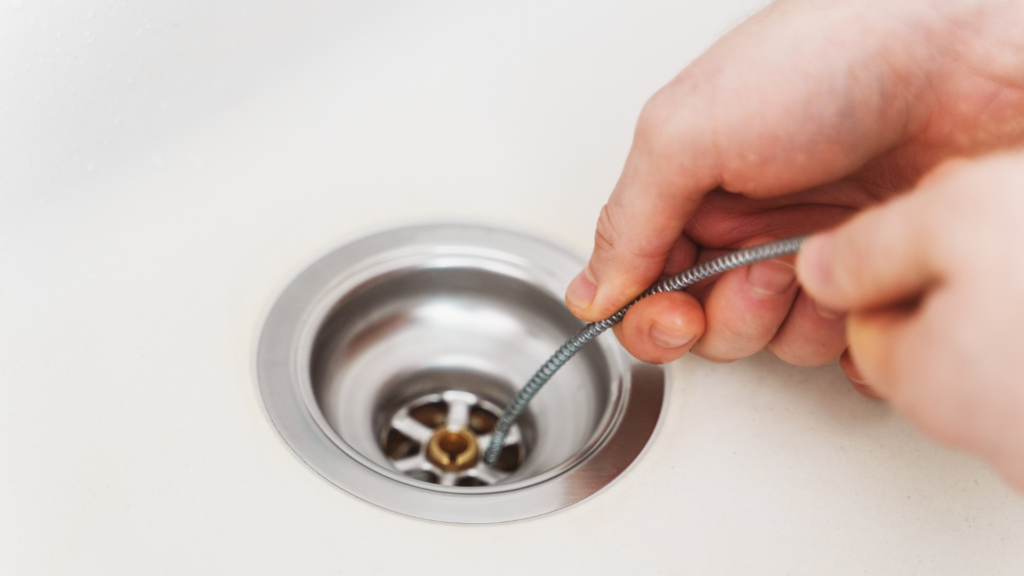
There comes a point where a drain snake and auger can only do so much, and recognising that limit is important for avoiding damage and making the problem worse.
When you hit resistance, it means the cable has found something—whether that’s a bend in the pipe, a blockage, or a joint. The instinct is often to push harder, but that’s exactly what causes problems.
Applying too much force can compact the blockage further, kink the cable, or even drive the tip into a weak point in older or worn pipes. In plumbing, slow and steady always wins. Let the tool work—don’t overpower it.
A drain snake or toilet auger only clears the blockage in front of you. It doesn’t fix what’s causing it further down the line.
If you notice any of the following, the issue is likely beyond a DIY fix:
In these cases, continuing to snake the drain will only provide temporary relief at best.
If you’ve reached any of the warning signs above, the safest and most effective option is to stop snaking and call a licenced plumber. When the issue goes beyond a simple blockage, professional plumbers use tools that go far deeper than a hand auger. CCTV drain cameras help locate the exact cause, motorised equipment clears tougher obstructions, and high-pressure hydro-jetting can clean the full pipe wall.
If the problem is structural, pipe relining can often repair the damage without digging up your property.
Dealing with a blocked drain or toilet is never fun, but having the right tool, and knowing how to use it properly, can make all the difference. A drain snake or toilet auger is often enough to clear common household blockages quickly, as long as you work slowly, apply gentle pressure, and let the tool do the heavy lifting.
The key is knowing your limits. If the clog doesn’t shift, keeps coming back, or seems deeper in the system, it’s better to stop before causing damage. What starts as a simple blockage can quickly turn into cracked pipes, damaged fixtures, or a much bigger repair if the wrong approach is used.
When in doubt, it’s always safer to bring in a professional. Our team of licenced plumber can identify the root cause and fix the problem properly, saving you time, stress, and repeat blockages down the track.
Got a stubborn blockage? The Plumberoo team is here to help get things flowing again quickly, safely, and without the guesswork. Book today!